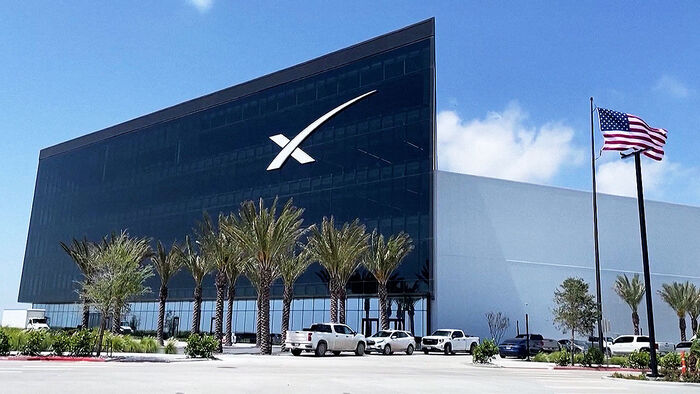
▲ SpaceX
Elon Musk's aerospace company, SpaceX, has entered the bond market just about ten days after completing its record-breaking initial public offering (IPO).
The Wall Street Journal (WSJ) and Bloomberg reported on June 22 (local time) that SpaceX held a conference call with investors on that day to announce its first-ever corporate bond issuance.
According to sources, the bond offering is valued at a minimum of $20 billion, with maturities ranging from 5 to 30 years.
In March, SpaceX utilized a bridge loan to refinance debt inherited from X (formerly Twitter) and xAI. The company faces $20 billion in debt that must be repaid within six months.
SpaceX plans to use the proceeds from these long-term bonds to repay that debt, with the remaining funds allocated for general corporate purposes.
Adam Sarhan, CEO of 50 Park Investments, explained, "Choosing to issue corporate bonds instead of stock is a way to avoid diluting shareholder value."
SpaceX raised $85.7 billion through its IPO, and its cash reserves are already estimated to exceed $100 billion.
However, as investors have shown a strong appetite for bonds from companies linked to the recent artificial intelligence (AI) boom, SpaceX appears to be capitalizing on this trend to increase its available liquidity.
Analysts at Oppenheimer, led by Timothy Horan, projected that SpaceX could accumulate $400 billion in net debt by 2031.
This figure is three times the size of Oracle's debt.
SpaceX is also generating cash flow through non-financial business operations.
According to CNBC, the company signed a contract on the same day to provide computing power to the open-source AI startup Reflection AI, which will bring in $150 million per month, totaling $6.3 billion by 2029.
SpaceX is currently building the Colossus 2 data center, an AI infrastructure project, and has previously provided computing power to companies such as Anthropic and Google through similar agreements.
※ Please note: This article was translated by AI and may contain errors.